Skip to content
Adeptic AI

From AI hype
to AI habit.

We handle every stage of AI integration: the strategy that decides what is worth doing, the training that gets people using it, the engineering that builds what does not exist yet, and the follow-through that makes sure your team is still using it three months later.

Thirty minutes with the strategist who would also build it, or a free AI scan first if you want to see the opportunity in writing.

Strategic AI delivery

Set your team up to get real value from AI.

Most businesses know they should be using AI and cannot see the route from here to there. We take you from that uncertainty to impact you can actually measure.

Target the highest return

We work through the business one team at a time, then build the workflows and agents that pay real money back

Financial Services

High impact

AI Document Review

Business impact

$380K/yr

OPCO

Ops + Compliance

3 month payback

Insurance

High impact

AI Claims Triage

Business impact

$410K/yr

CLUW

Claims + Underwriting

2 month payback
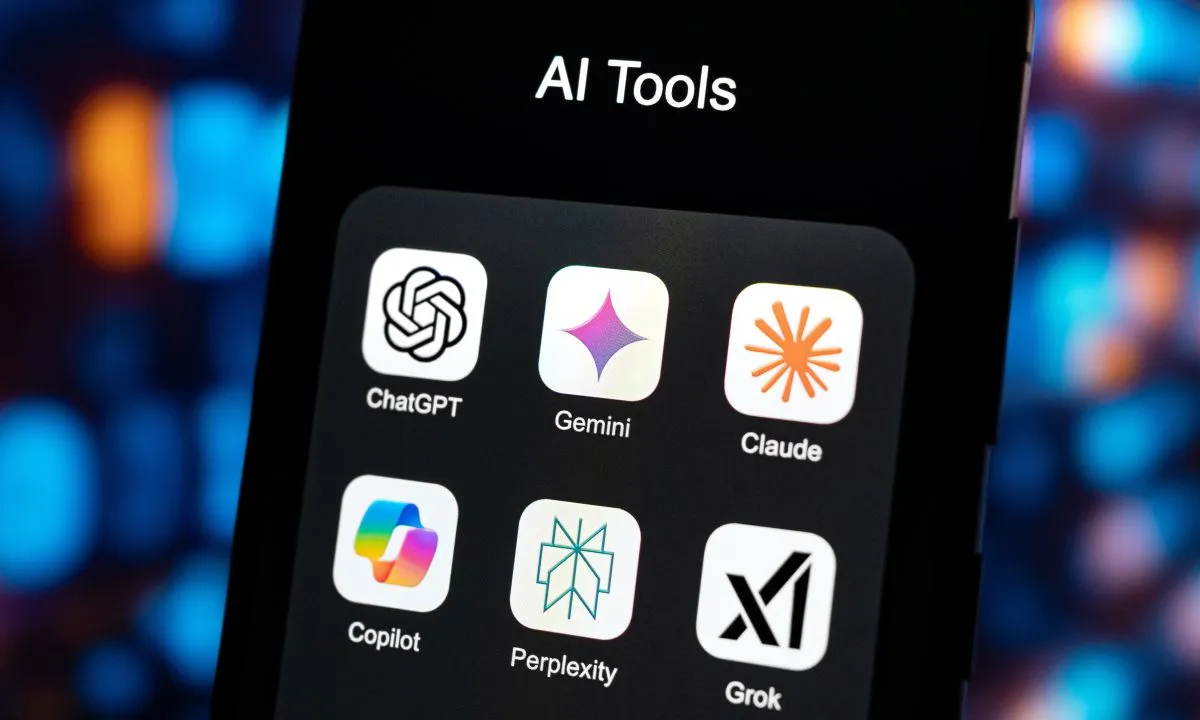
Tune the right models

We choose and configure the models that fit your stack, your data and your budget, then prove the choice against your own work

A smartphone screen showing AI tool icons including ChatGPT, Gemini, Claude, Copilot, Perplexity and Grok.

Change how people work

We teach your team where AI earns its place, where it does not, and how to tell the difference without us in the room

A video call grid of team members connected by a network overlay, representing collaborative AI adoption across a business.

All of AI integration, not just one piece of it.

Strategy through to the systems your staff open on a Tuesday morning. Most engagements draw on several of these at once, and very few need all six.

Slender pale oak rods branching into three routes on a cream plinth, with one terracotta rod on the chosen path.

AI strategy and roadmap

A prioritised view of where AI is worth applying across your business, what each option would take to deliver, and which ideas to leave alone.

Stacked pale wooden rings on upright pegs along a cream plinth, with one terracotta ring mid-transfer.

Team enablement and training

Hands-on training built around your own workflows, so staff learn on the work in front of them instead of on generic examples, and someone internal is left able to carry it on.

A precisely cut pale oak dovetail joint interlocking on a cream plinth, pinned with a single terracotta dowel.

Custom AI tools and agents

Purpose-built assistants, agents and internal tools shaped around your processes, your data and your rules, integrated into the systems your team already opens every morning.

A winding pale oak marble run on a cream plinth with a terracotta sphere partway down the track.

Process and workflow automation

End-to-end automation of the routine path through a process (the documents, queues, approvals and handoffs), with people kept on the decisions that genuinely need judgement.

Stepped plinths of pale stone and oak stacked into a foundation, resting on a terracotta base layer.

Data and systems foundations

The connective work everything else depends on: integrations between your systems, pipelines that keep data current, and getting your information into a state software can actually use.

Three nested pale oak frames on a cream plinth with a single terracotta bar set across the middle frame.

Governance, security and policy

Practical policy, access controls and review processes that let people use AI on real work without putting client data, contractual obligations or compliance at risk.

We build into your stack, not beside it.

An AI system that lives in its own separate tool gets used twice and then forgotten. These are the kinds of systems we read from and write back into, so the work shows up where your team already looks.

SalesforceHubSpotMicrosoft 365SlackTeamsZendeskNotionGoogle Drive
SnowflakePostgreSQLAirtableJiraShopifyTwilioXeroQuickBooks

Strategy. Readiness. Delivery.

It starts with strategy, because the most expensive AI mistake is building the wrong thing well. Each stage is scoped on its own and produces something useful by itself, so you can stop after any one of them and keep what it produced.

Pale wooden blocks of varying heights arranged like a model city, with a single terracotta block standing forward from the rest.
Strategy

Work out what is actually worth doing

Most companies do not have an AI problem so much as a prioritisation problem. We go through how the business actually runs and come back with a ranked view of where AI would pay, what each option would take to deliver, and which ideas are best left alone. What you get is a plan specific enough to act on and honest enough to include the things we think you should not build.

How we choose the first project
Concentric wooden tiers curved into a small amphitheatre with a frosted glass sphere resting at the centre.
Readiness

Get the business ready to use it

Buying tools does not change how a company works; people and process do. This is training built on your own workflows rather than generic examples, the data and integration groundwork that quietly stalls most projects, and clear rules about what staff are and are not allowed to put into these systems. It is the stage most often skipped, and it is the most common reason nothing sticks.

How we bring teams up to speed
Machined wooden, glass and aluminium modules interlocked into a single assembled form beside a slim terracotta rule.
Delivery

Build it, run it, and prove it worked

Whatever the plan calls for (something custom built, a process automated, or software you already pay for finally configured properly), taken all the way into daily use rather than stopping at a prototype that impresses a steering committee. We agree how success will be measured and record where you are starting from, so what you get at the end is a number rather than a story.

What we build and integrate

One of our systems, running on this page.

This is one example of one capability: document extraction, running for real rather than staged. It is nowhere near the depth of an actual engagement, which is built specifically around your business and your industry. Try a sample document, or upload one of your own.

Document extraction

Stored sample
Try one:

Or use your own. Drop a document here, or choose a file. PDF, PNG, JPEG, or text, up to 4 MB.

Your file is sent to Anthropic’s API for this one request, is never stored here, and is not used for training. It is still a public demo, so please don’t upload anything you could not email to a stranger. The samples above exist for exactly that reason.

Source document
NORTHRIDGE SUPPLY CO.
1420 Commerce Way, Suite 300
Akron, OH 44311

INVOICE

Invoice #: NRS-2026-04817
Date: 14 July 2026
Terms: Net 30
Due: 13 August 2026

Bill To:
Halloway Mechanical Contracting
Attn: Accounts Payable
88 Foundry Street
Youngstown, OH 44503

PO Reference: HMC-PO-99312

Description                          Qty      Unit        Amount
3/4" copper elbow, type L            240      $3.85       $924.00
Ball valve, brass, 1"                 60      $18.40    $1,104.00
Pipe hanger assembly                 150      $6.20       $930.00
Threaded rod, 1/2" x 10'              40      $11.75      $470.00
Freight                                                    $185.00

                                     Subtotal            $3,613.00
                                     Tax (6.75%)           $243.88
                                     TOTAL              $3,856.88

Remit to: Northridge Supply Co., Acct 8841-22019, Routing 041215663
Questions: ar@northridgesupply.example
Commercial invoice
Invoice number
NRS-2026-04817
Found
Vendor
Northridge Supply Co.
Found
Bill to
Halloway Mechanical Contracting
Found
Invoice date
14 July 2026
Verified
Due date
13 August 2026
Verified
Payment terms
Net 30
Verified
PO reference
HMC-PO-99312
Found
Subtotal
$3,613.00
Verified
Tax
$243.88
Verified
Total due
$3,856.88
Verified
Remittance account
8841-22019
Found

Line items (5)

3/4" copper elbow, type L240$924.00
Ball valve, brass, 1"60$1,104.00
Pipe hanger assembly150$930.00
Threaded rod, 1/2" x 10'40$470.00
Freight—$185.00

Flagged for a human

  • Remittance account and routing numbers were read from free text rather than a labelled field. Payment details are worth a human check before money moves.

No confidence score here is the model’s own. Every value is checked against the document it came from, and anything that does not check out is handed to a person.

  • Verified: the quoted text was found in the document and a check passed, such as the totals adding up or a date parsing.
  • Found: the quoted text was found in the document, with nothing further to check it against.
  • Review: the value is absent, a check failed, or the quoted text could not be found. In a production build this is the queue a person works.
Claude Sonnet 5 · structured output

A stored result, so there is nothing to wait for. Run it to see the real thing.

The things everyone asks.

Answered here so that the call itself can be about your business rather than about how we work.

What do we actually get at the end?

It depends on what the problem turns out to need. Sometimes it is custom software running in your environment. Sometimes it is tools you already pay for, configured properly, with your team trained to use them. Often it is a prioritised plan plus the first piece of it delivered. What every engagement includes is before-and-after numbers on whatever we changed, and something people are still using in six months.

We have developers. Why can't they build this?

They probably can, and if they have shipped an AI system to production before and have the room to focus, that is the cheaper path. What sinks most internal attempts is not ability, it is that the work happens in the gaps between everyone's real job. The parts that decide whether a system survives contact with users (evaluation, failure handling, the boring integration work) are the first things to get cut when the sprint fills up.

Will we have to replace any of our software?

Almost never, and we would push back if someone suggested it. We build into what you already run. If a tool you are already paying for has an AI feature that solves the problem, the recommendation will be to switch it on rather than to bill you for rebuilding it.

What is this going to cost?

Enough depends on scope that a published number would mislead you more than it helped. Engagements open with a short fixed-price piece of discovery, so the first invoice is small and walking away afterwards is easy. You get an exact figure in writing before any build starts, and the discovery fee comes off that figure if you go ahead.

Who should not hire us?

Anyone wanting a chatbot bolted onto a marketing site. Anyone who cannot yet describe what a good outcome would look like, because we would just be guessing expensively on your behalf. Anyone shopping purely on hourly rate. And anyone who needs a deck for a board meeting rather than a system that runs, which is a real need but not the one we serve.

How quickly does something actually go live?

That depends on the scope, which is why there is no number on this page. One well-defined workflow and a rollout across a division are not the same project, and quoting the first would misrepresent the second. You get a timeline for your specific scope before you commit to it, and you hear from us early if it moves rather than at the end. What does not vary is that we agree how success will be measured before anything gets built, and record where you are starting from, so you finish with a comparison rather than a story.

Who owns what you build?

You do, entirely. Code in your repositories, models running on your own API keys, documentation aimed at whoever picks it up next. Nothing depends on us continuing to exist and there is no license to keep paying.

What if the answer is that we don't need AI?

Then that is what we will tell you, in writing. A fair number of problems that arrive labelled as AI problems turn out to be a reporting query, a form, or a process that nobody has looked at in four years. Saying so costs us one project and tends to earn the next one.

Find out what this is worth to you.

Bring whatever is on your mind, whether that is a process that annoys you or a board that keeps asking questions. In half an hour you will know whether there is something here worth doing, roughly what it would take, and whether we are the right people for it.